
Exploring Northern Namibia
- On August 02, 2014
- By victoria
- In Africa, Namibia
 0
0
Crossing the border into Namibia and we were straight into a small park, with elephants and giraffes wandering across the road. Our first nights camp was on the banks of the Kavango at Rainbow Camp. The following day we drove the last of the Caprevi Strip and headed into mainland Namibia, to Roys Camp, just outside of Grootfontein, it was a characterful camp, with old morris minor shells dotted about, lots of sculls, and the funniest internet cafe I’ve seen yet, it consisted of a power socket attached to a fence post and a bunch of logs to sit on, with a wooden sign hanging above stating “internet cafe”!
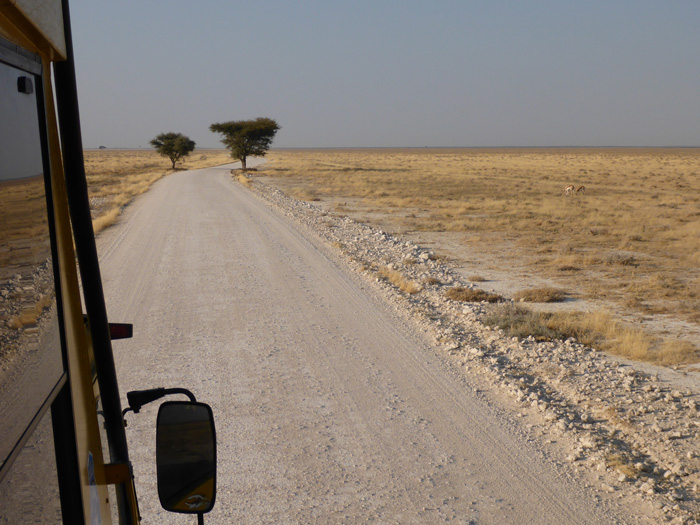
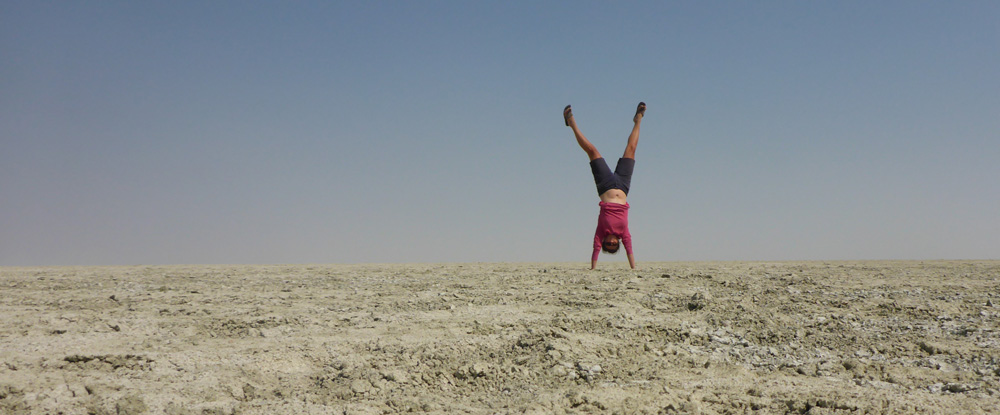
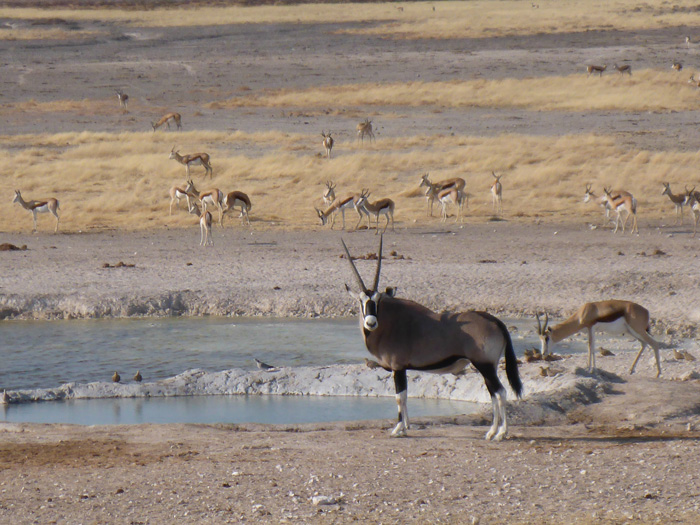
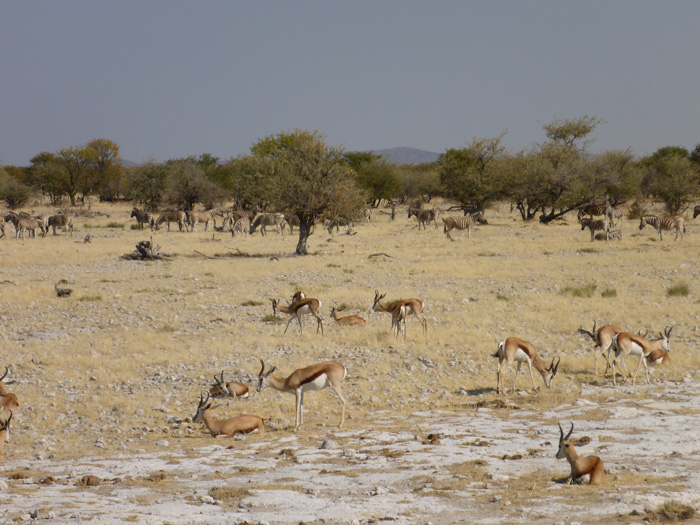
Our next stop was Etosha National Park (20,000 sq km), Etosha used to be part of a 99,526 sq km reserve, where animals could follow their normal routes, but over the years it has reduced to it’s current size. The landscape is very flat, dusty and barren and in the middle of it all sits the Etosha Pan, a saline desert which turns into a shallow lagoon after the rains.
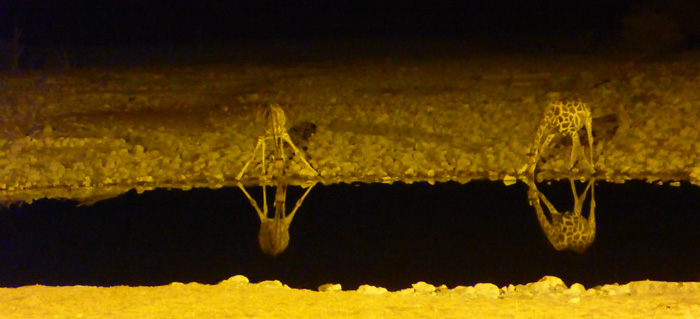
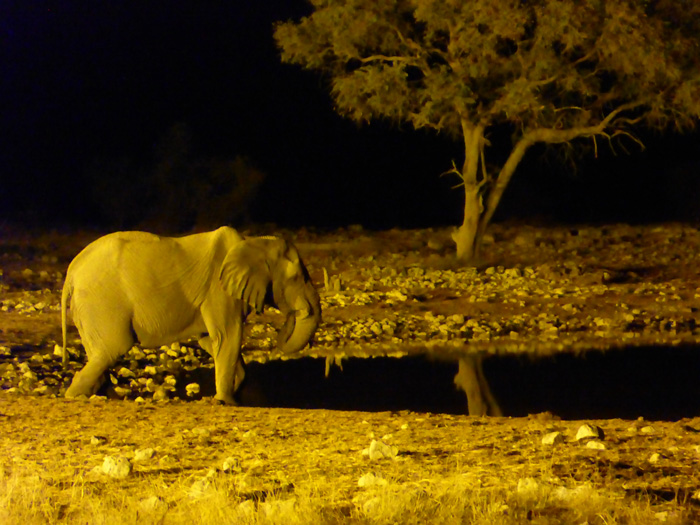
There are a number of watering holes dotted around the park, where we saw giraffe, elephant and zebra drinking. At one of the watering holes we visited there was a lion chilling nearby, there were lots of animals, zebra, impala, gemsbok, round the watering hole keeping a close eye on him as they tried to get a drink, and every so often he would move, causing all the animals to make a run for it, only to return a minute later.
We stayed two nights in the park, the first night at Namutoni Rest Camp, the second night at Okaukuejo Rest Camp. At Okaukuejo, there was a floodlit watering hole surrounded by a wall and benches so you could sit and watch for thirsty animals. I stayed at the watering hole till around 11pm and saw giraffe, rhino and an elephant come to drink. The next morning I was woken around 5am in my tent, by a lion roaring! I quickly went to the watering hole to see if I could see him, but he had passed through already.
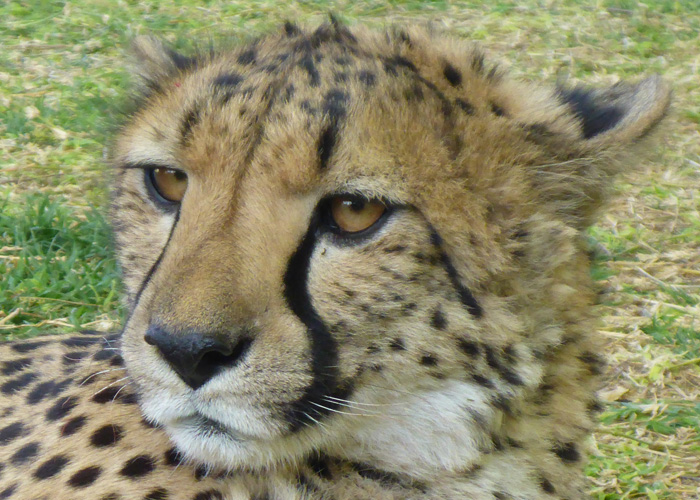
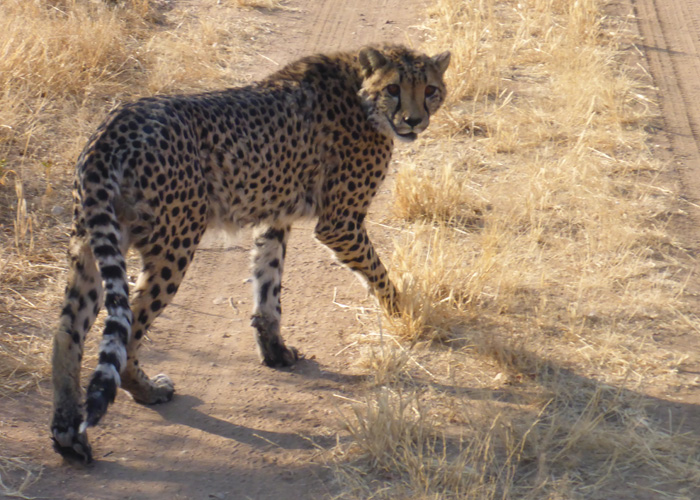
After leaving Etosha we headed to Kamanjab and our camp at Cheetah Sanctuary Park, the park is a family run home to orphaned, troublesome (killing cattle) and injured cheetahs, which have been brought in by locals or rescued by the sanctuary. There were a few cheetahs very used to humans, so we were able to touch them. Most of the cheetahs now live in the park, they get fed once a day and the rest of the time they are left to fend for themselves, catching impala, warthogs, etc that pass through the park. There were two females with cubs kept in smaller areas to save the cubs being killed by the male cheetahs, they will be returned to the main park once they are old enough. Unfortunately none of the chetahs will be released back into the wild.
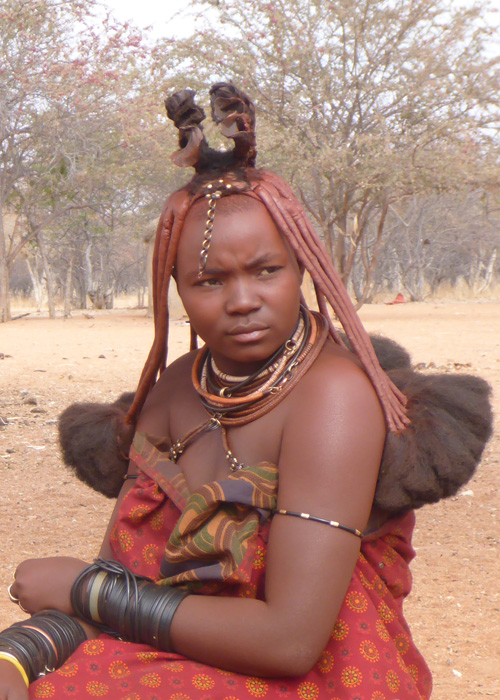
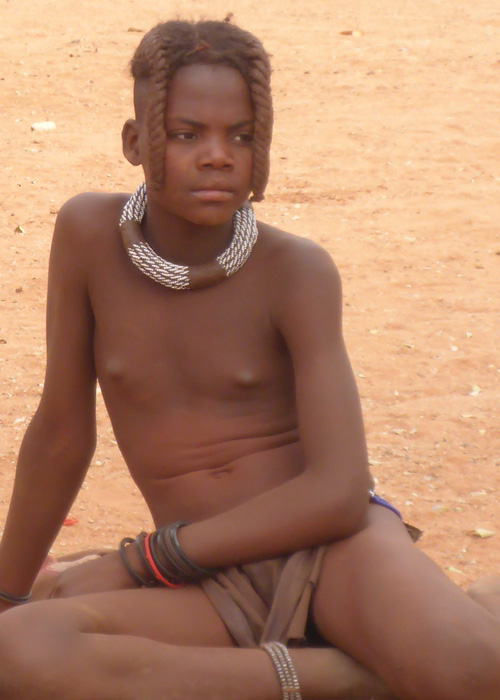
In Kimanjab we visited a local Himba tribe village, where the women showed us how they wash their hair every day, it takes them two hours! The Himba people wash twice in their lifetime, once when born and once when they die. The women use butter mixed with red ochre on their skin every day, this is what gives the red colouring.
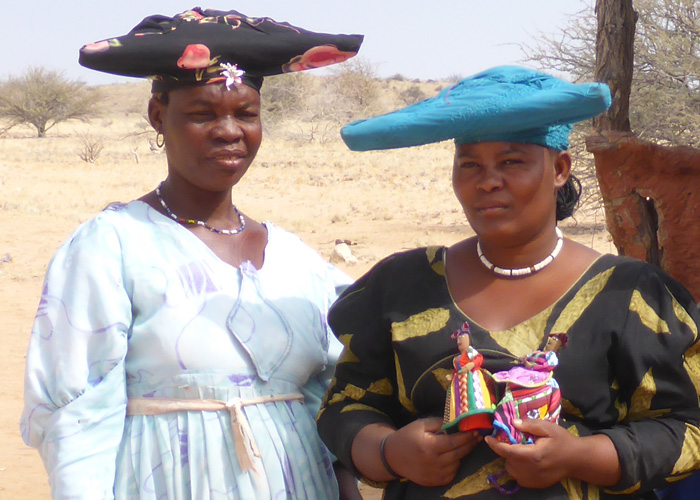
We visited a curio stall selling dolls made by Herero women, the dolls wear the same traditional dress the women do, with large head dresses and colourful dresses. The dress comes from colonial German and Belgian settlers and is still worn by women today.
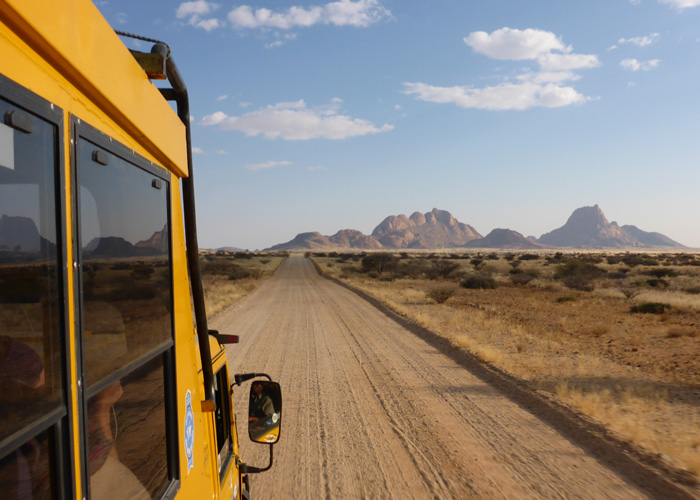
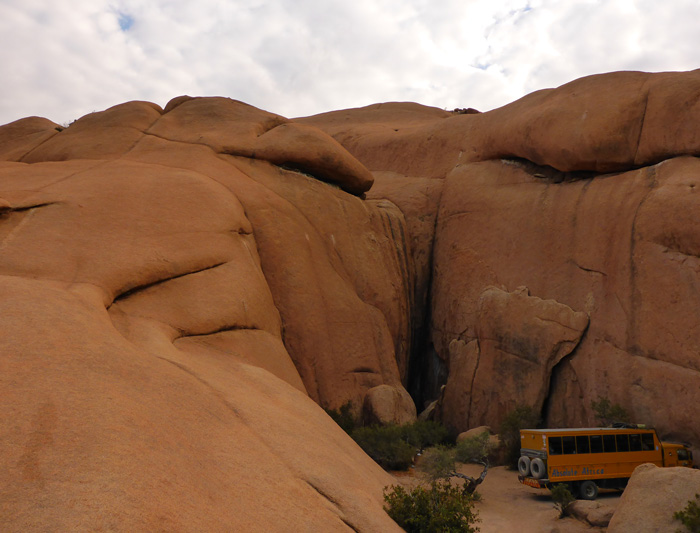
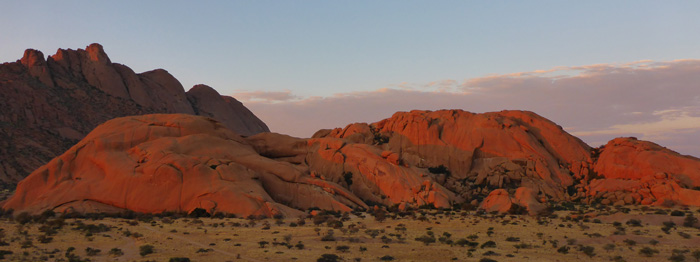
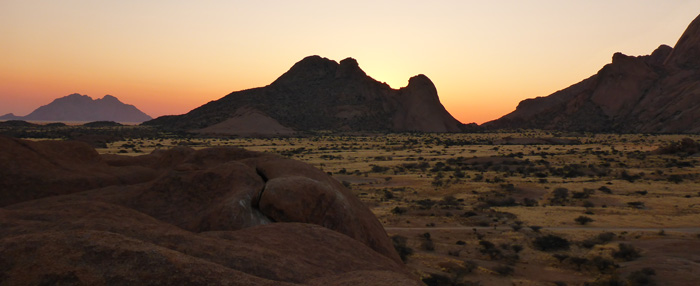
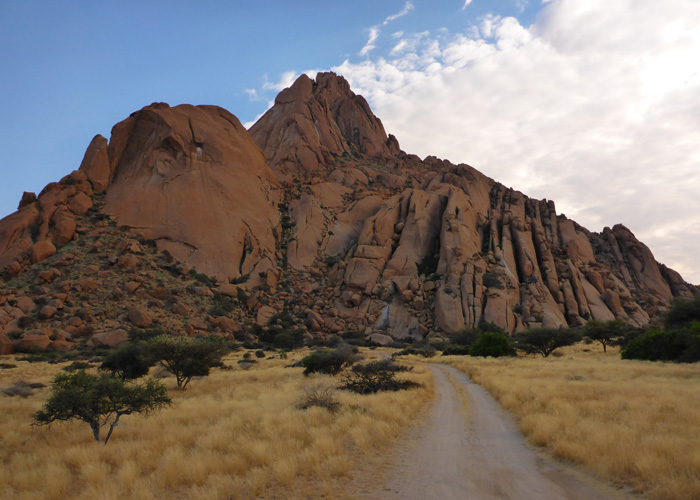
The landscape in Namibia is spectacular, flat barren dusty plains, lead into moonscape like valleys, huge rock formations, mountains and granite cliffs. The drive from Kamanjab to Spitzkoppe took us through some of this land scape, and then on the horizon I could see a pyramid like shaped mountain, which got bigger and more prominent as we approached it, it turned out to be the location for our bush camp that night. Spitzkoppe (1728m), known as the “Matterhorn of Arica” due to it’s shape, sits surrounded by rolling rocks and boulders, of beautiful pink granite, we scrambled to the top of one of the rocks for the sunset, which just bounced off the rocks and they gave off amazing colours. Our camp was in the base of one of the gullies, we didn’t put our tents up, instead we slept out on the rock and watched the stars!
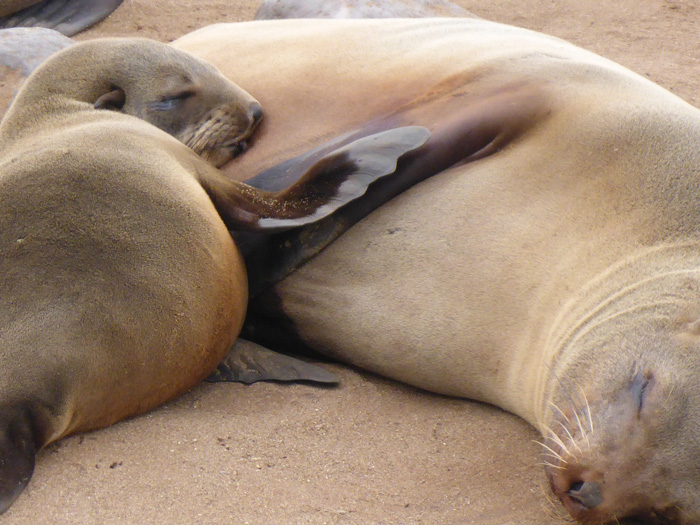
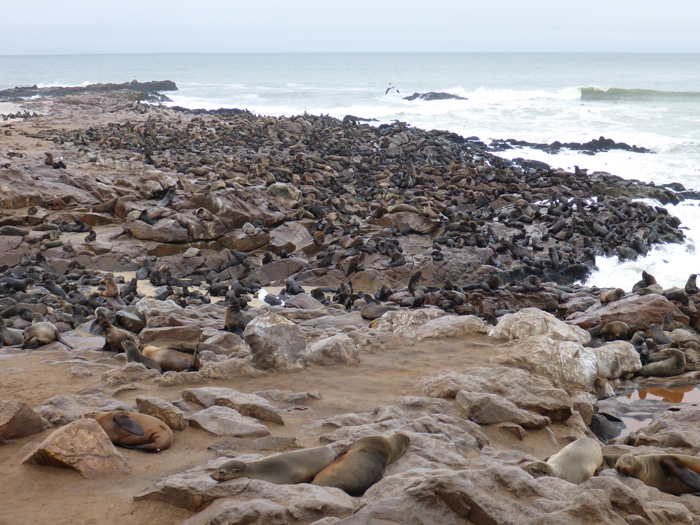
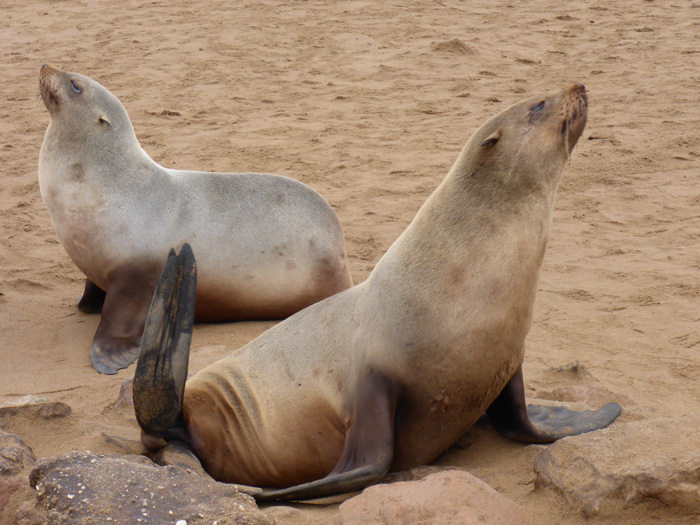
As we left Spitzcoppe in the morning, there was a huge cloud, like a flattened dome, over the entire area, it was very interesting! It was a beautiful sunny warm morning, but as we drove towards the coast, I could see the cloud approaching and we drove straight into it, like a wall, and it soon became cold, quite like Scotland actually. We visited the Cape Cross Seal Reserve, the only place in the world you can find the Cape Fur Seal. There were thousands of seals on the beach and in the water, in November and December there can be up to 210,000 seals at one time, they were so noisy and quite smelly!

I grew up in Nyeri...not too far from Nanyuki. Fond memories. You've described Nanyuki pretty accurately. Glad you enjoyed your…
Hallo.i have reading now ur article. I live 9 years in Nanyuki and like this life and the ppl. Welcome…
Thank you! Glad you enjoyed it and found it useful. I enjoyed the few months I stayed in Nanyuki last…
Hey Mzungu lassie? Very informative info about Nanyuki and the surrounding areas. I've been there once (for a day) and…
Brilliant pics, You must sleep well, whizzing around on quad bikes up & down the dunes and sand boarding.