
Matobo National Park, Zimbabwe
- On July 17, 2014
- By victoria
- In Africa, Zimbabwe
 0
We stayed at a camp called Burkes Paradise just outside of Bulawayo, Zimbabwe’s second largest city after it’s capital, Harare. It was an hours drive to the Rhodes Matobos National Park (425 sq km), we were visiting the park with African Wanderer Safaris, our guide Iain, who had been taking safaris in the park all his life, was extremely knowledgable about the park and it’s animals, specifically the rhinos, he had grown up watching some of the rhinos we saw, he had seen them born, grow up and have offspring of their own.
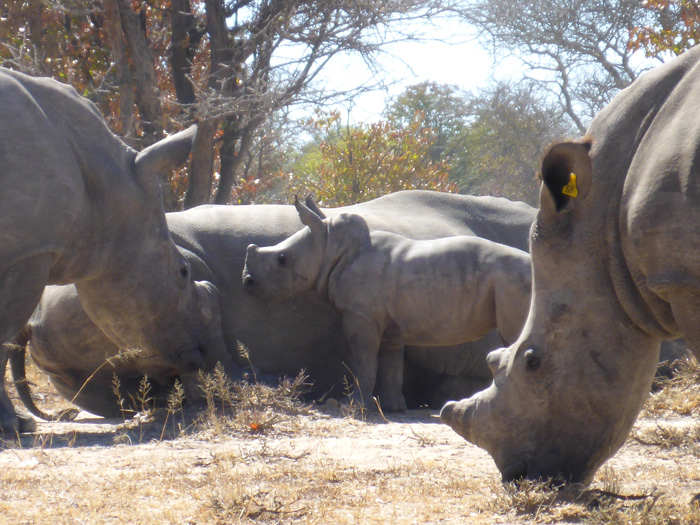
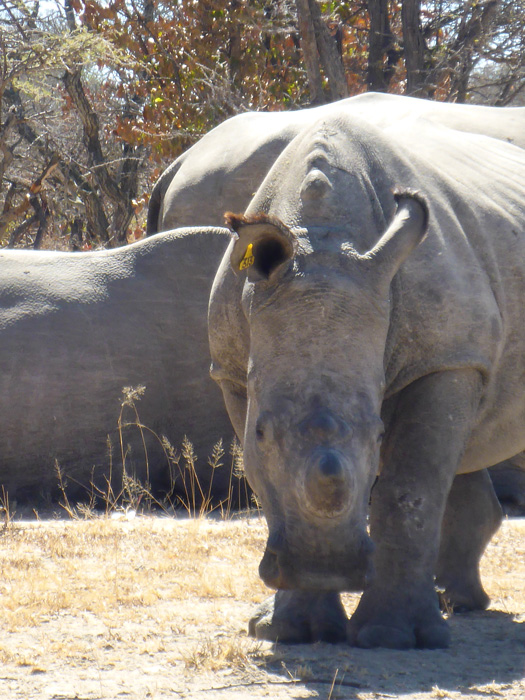
Once inside the park, we were given some inside info by the park rangers as to the whereabouts of a crush (name for a group/herd) of white rhinos, so we parked up our 4×4 and headed off into the bush on foot, we had to walk in a single file line and be very quiet, and once we found rhino we had to crouch down while viewing them, so that we were less dominating and blend more into the scenery (we had also been told to wear clothing that blended into the landscape, no bright colours, or white). Within fifteen minutes of walking, we were about 10 meters, if that, away from 7 adult and one baby white rhino. One of the females was heavily pregnant and due to give birth in the next few weeks. They were all happily grazing, and not bothered by our presence, it was approaching midday an extremely hot, so after a while of watching them they all lay down in the shade of the trees and relaxed. The baby kept wandering around nuzzling each of the adults as if to make them play, but they weren’t interested, then mum and baby moved on. The rhinos were aware of our presence, looking straight at us and walking towards us (we would slowly have to shuffle backwards, still in the crouching position), but they never seemed bothered or aggressive.
The rhinos we saw all had their horns humanely taken off by the park in an attempt to prevent poaching. This had worked to a certain extent, but unfortunately the poachers have still poached a number of the rhinos for even the smallest stump of horn. Rhino horn is the same as our fingernail, but in Asia it is thought to be an aphrodisiac and is sold for huge amounts of money.
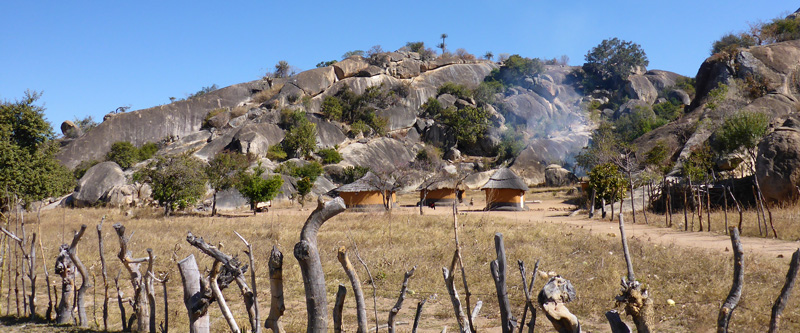
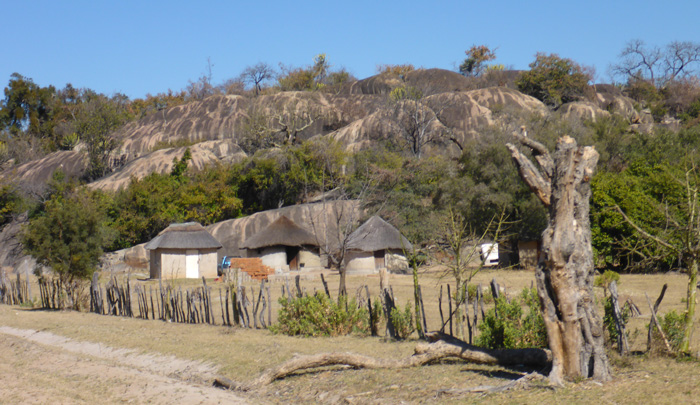
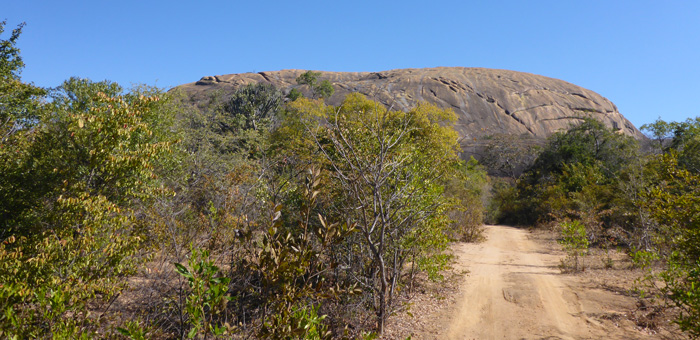
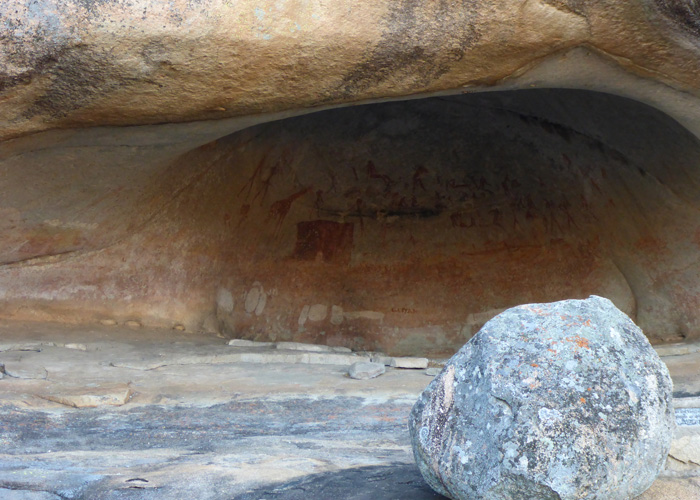
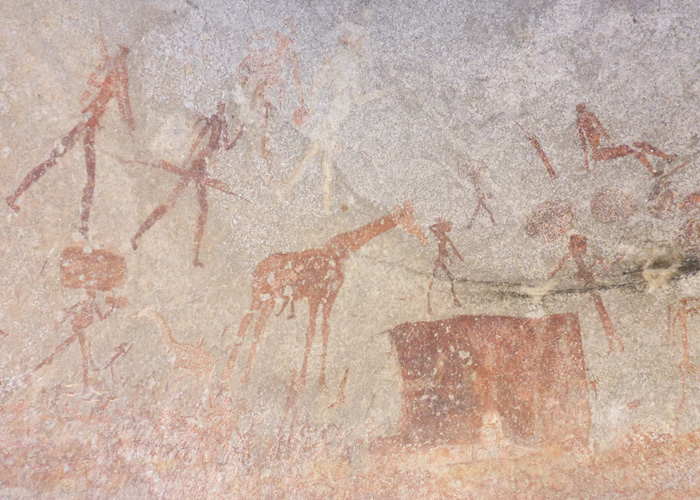
We drove south through the park to Silozwi village, where we walked up Silozwe a huge granite rock, to a rock art cave called Silozwane Cave, one of 3000 officially registered rock-art sites in the park. Here we could clearly see a number of drawings of people, animals and villages, these paintings had been done by bushmen over 60,000 years ago, these painting are like the diary of a bushman, what he has seen and hunted in the area, such as rhino, kudu, elephant, lion, impala, lizards, snakes giraffe, leopard, sable and fish. The paint is made with hematite, limonite (two types of rock) and ash, the rocks are crushed and mixed with ash and charcoal to make the colours, then mixed with urine and bile, the acid from the gallbladder (the only part of an animal that bushmen don’t eat) eats and etches into the rock allowing the paintings to last for such a long time.
Ian has studied the bushmen for over thirty years, met them and spent time with them. Today there are less than 3,000 busmen still alive, living the same lifestyle they have always lived, sadly there are only 43 left in Zimbabwe, Botswana has 250, Namibia has 2,500 and Angola has 100. An interesting fact Ian shared with us was, that a bushman’s body has adapted to have a fat storage area, in the buttocks, which will significantly enlarge and deflate. When he hunts, he will only kill enough food that he and his family can consume in one sitting, this sitting may take up to 36 hours, they will eat and sleep, eat and sleep till the food has been consumed and their fat stores are full and no food is left. There are records of a single bushman eating upto 20kg of meat in a single sitting. Bushmen are small, on average 4ft 6” in height, eating this amount of meat could be up to half their body weight! It can be up to 10 days or two weeks till he kills again, in that time he’ll eat berries, nuts, seeds, snakes, lizards, but nothing big like an antelope, impala or zebra.
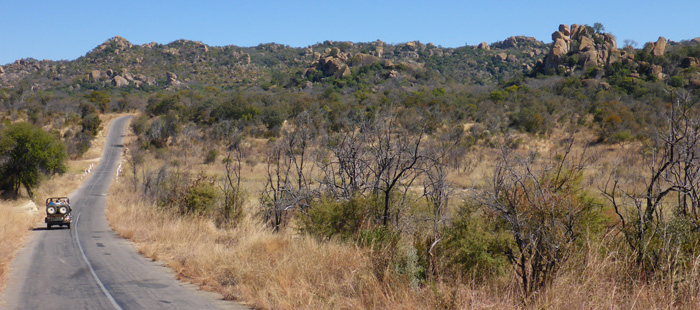
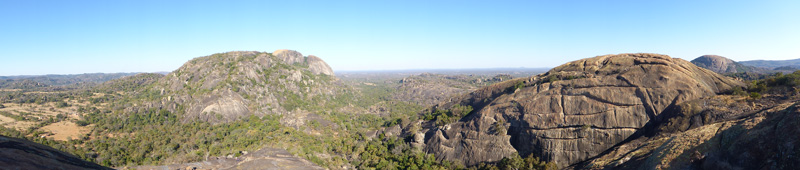
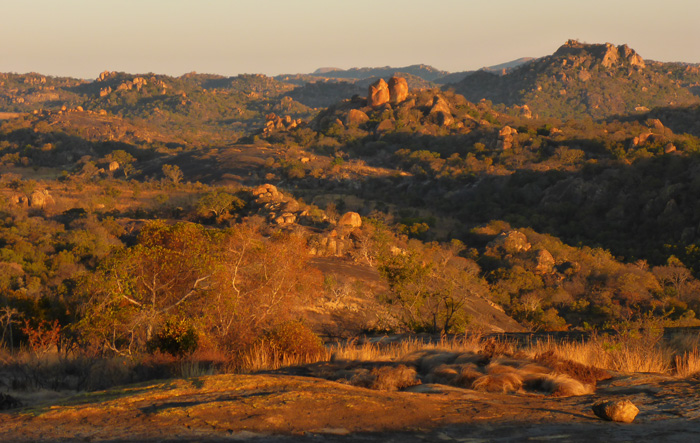
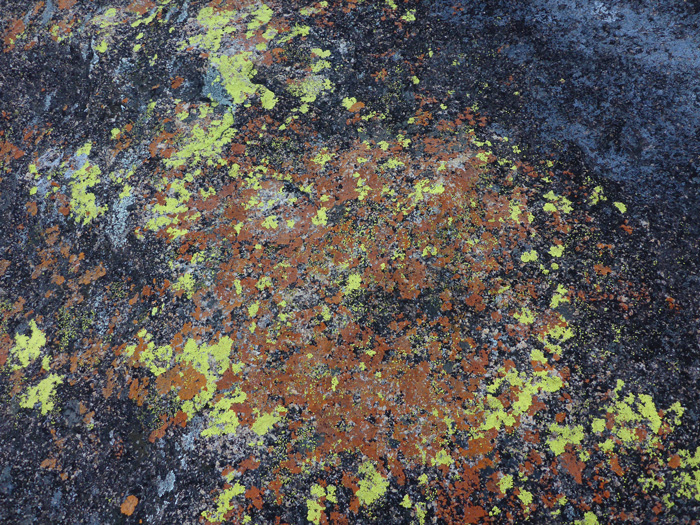
The landscape of the park itself “The Matopos” (meaning bald heads (like the rocks)), which has in recent years been named a Unesco World Heritage site, is dominated by huge granite boulders covered in brightly coloured lichen, balancing on top of one another. The view from the top of Silozwe was beautiful and stretched for miles, you could see all the boma’s of Silozwi village.
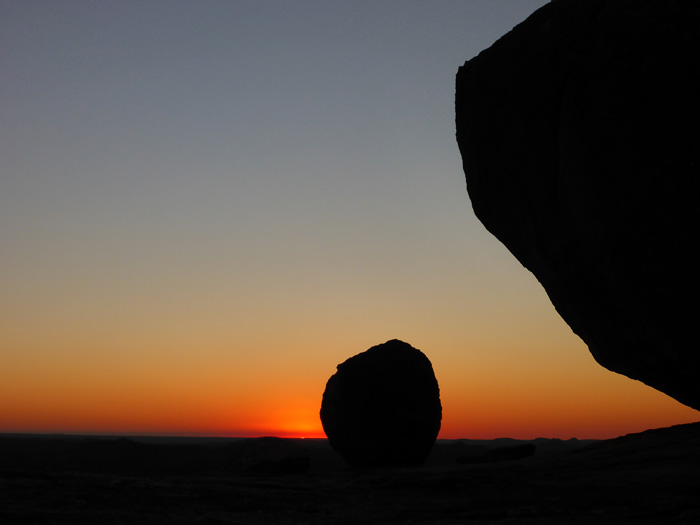
At sunset we visited the historic site of World’s View (Malindidzimu Hill), which gave the most most striking views and had massive boulders just perching on the top. Right on top is where Rhodesia’s founder Cecil Rhodes’ grave site is (Zimbabwe and Zambia used to be Rhodesia).


I grew up in Nyeri...not too far from Nanyuki. Fond memories. You've described Nanyuki pretty accurately. Glad you enjoyed your…
Hallo.i have reading now ur article. I live 9 years in Nanyuki and like this life and the ppl. Welcome…
Thank you! Glad you enjoyed it and found it useful. I enjoyed the few months I stayed in Nanyuki last…
Hey Mzungu lassie? Very informative info about Nanyuki and the surrounding areas. I've been there once (for a day) and…
Brilliant pics, You must sleep well, whizzing around on quad bikes up & down the dunes and sand boarding.