
Biking in Hell’s Gate National Park
- On June 18, 2014
- By victoria
- In Africa, Kenya
 0
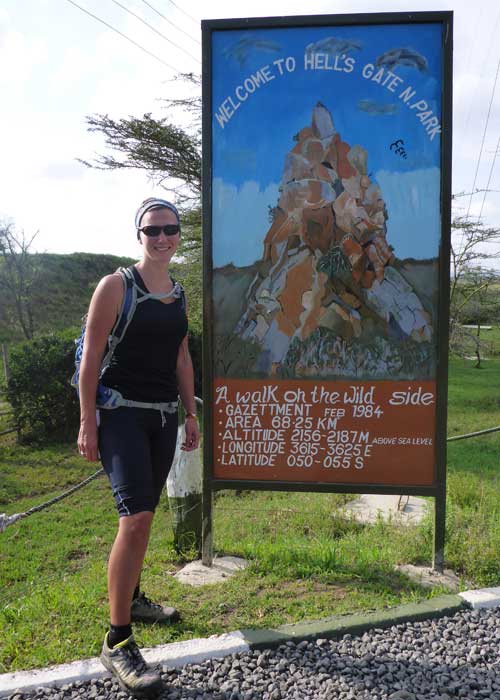
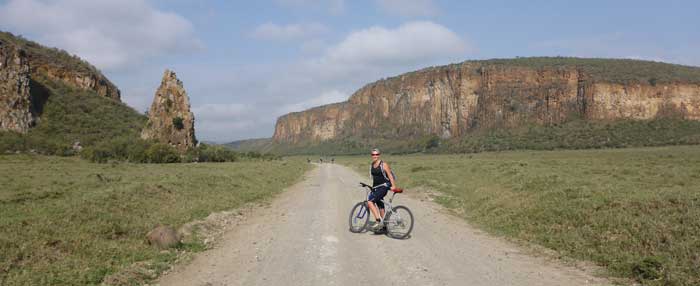
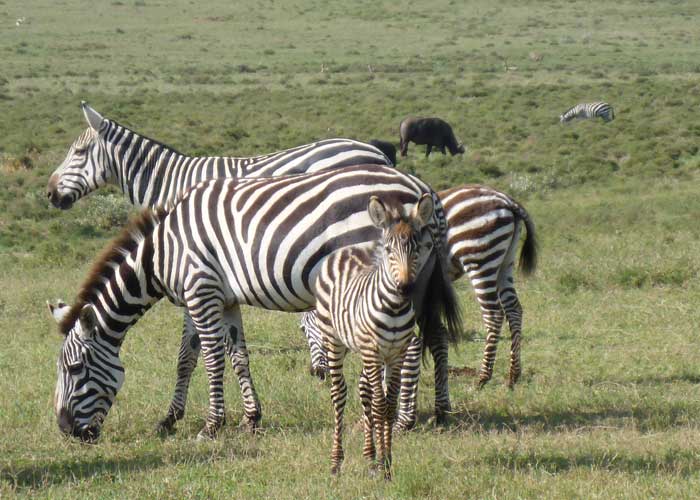
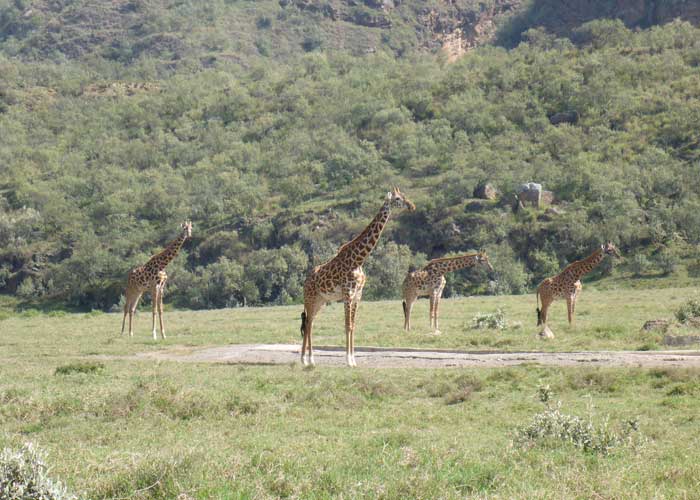
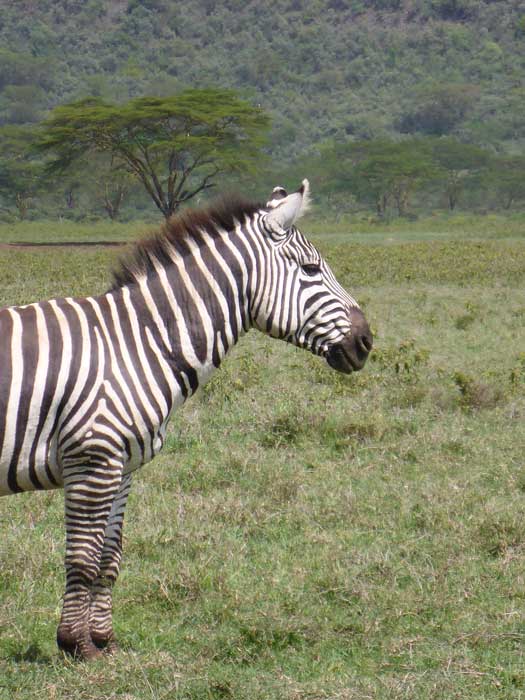
Today we headed to Hells Gate National Park, entering via the Elsa Gate on mountain bikes. Within the first 5 minutes we turned a corner and the view was amazing! Big red cliffs rising up above the plains where there were lots of Plains Zebra, Masai Giraffe and Eland grazing.
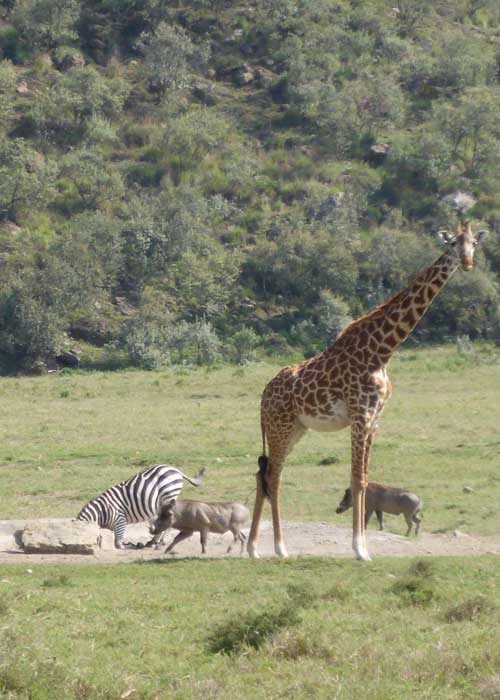
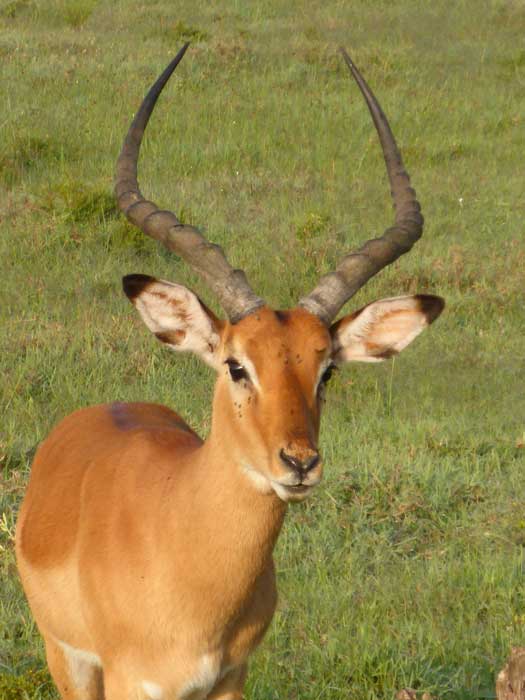
As we cycled through the park we passed through herds of zebra with babies, some of them were cantering around across the road and you could hear their mating calls. We also saw Eland for the first time they are the biggest antelope in Africa, they are huge animals, the males can weigh up to 2 tonnes, but they are still able to move swiftly and jump great heights, sometimes up to 2 meters! There were a couple of manmade watering holes that attracted lots of animals, we saw a zebra trying to get a proper drink while a warthog tried to join it.
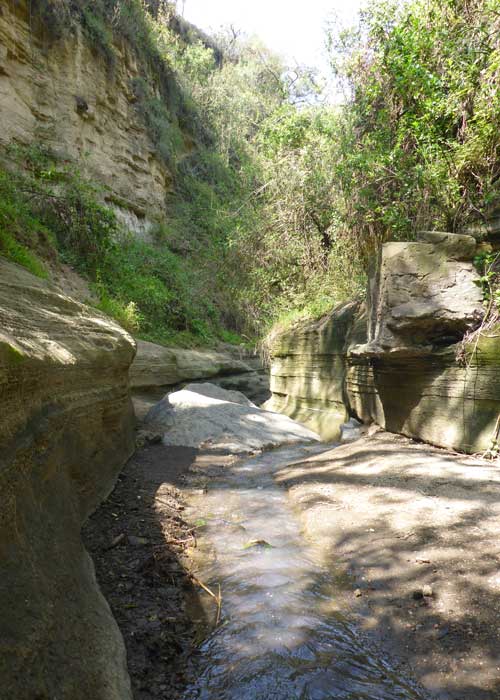
It was about a 15km cycle through the park to the gorge, mostly downhill. The gorge had fascinating rock formations and went on for about 6 or 7km. There was not much water in it, only a trickle in the main gorge. The last time it had a significant amount of water in it was in 2012.





Lake Nakuru National Park
- On June 16, 2014
- By victoria
- In Africa, Kenya
- 0
We visited Lake Nakuru National Park, which is 5km south of Nakuru, Kenya’s fourth largest city and the capital of the Rift Valley Province.
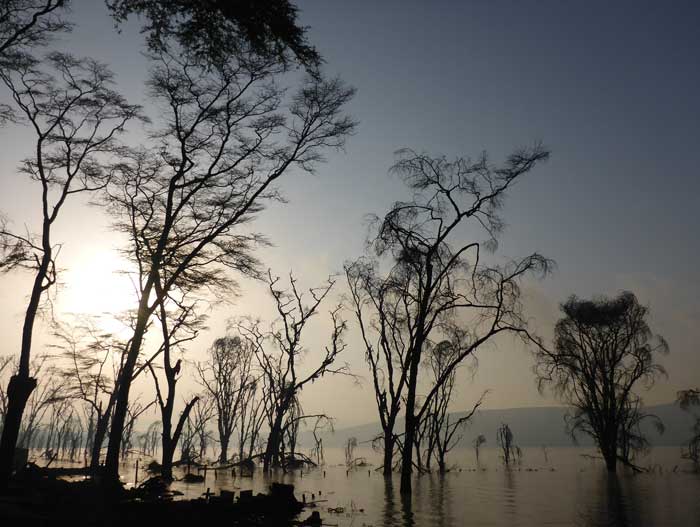
Just inside the main gate you pass the previous main gate which is now flooded, along with the original office block. The long rains in 2012 raised the level of the lake considerably and due to the fact that Lake Nakuru has no outlet, the level hasn’t decreased much since. This has also had an effect on the number of Greater and Lesser Flamingos in the park. There were once 2 million Lesser Flamingos, but the increase in water level lowered the salinity and the flamingos began to disperse.
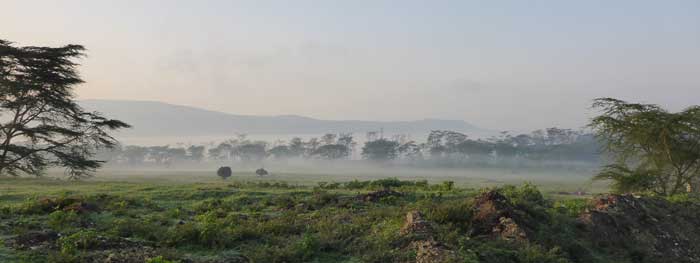
Traveling in a matatu with a roof that raised up so we could stand inside and look out the roof, we got into the park just after sunrise, the mist was still lying heavily on the lake, making for some lovely scenery. We were only in the park 5 minutes and we saw a Lioness and her cub feeding of a caracas! The park is 188 square kilometres and one of Kenya Wildlife Services premiere parks, the other being Amboseli.
The landscape of the park is mostly acacia forest, with open areas, escarpments and cliffs. I saw a lot of reddish brown acacia trees, which looked like they had died. Our guide told us this is due to the floods, acacia trees have shallow roots and if they take on too much water they can’t cope and it kills them.
Hoping to see my first Lion today! We were driving up to Baboon Cliff, I was leaning out the window scanning the bushes for animals. We turned a sharp corner and there he was, lying in the dusty ditch in the sunshine, a young male, about two years old. He had a lovely speckled face, his mane wasn’t fully grown yet, but he had huge eyes staring back at me! When we stopped to look at him he got up and moved into the bushes, but we managed to get a good view of him there. The view from Baboon Cliff looked out over the lake and you could see just how much has been flooded.
We drove on anti-clockwise round the lake. In the forested areas we saw lots of Baboons and some Vervet Monkeys and on the more open areas we saw herds of Rothschild Giraffe feeding on the acacia trees, quite a few of them had lain down, so all you saw was their neck and head high above the grass. There were lots of Planes Zebra and Buffalo on the open areas, and down by the waters edge there were Yellow Billed Pelicans, Flamingos and Buffalos lying in the water to cool off.
When we got back into the denser forest we saw three White Rhinos, two adults and a baby, grazing on the grass just beside the road. The White Rhino has a flatter snout than the Black Rhino, this makes it easier for them the graze the grass, the White Rhino is also more docile than the black and usually travels in a crush (herd). Later on in the afternoon we saw a lone Black Rhino on his own further in the bushes. The park has lost 25 black rhinos to poachers this year (2014) alone!





My take on life in Nanyuki
When I first came to Nanyuki, it was my first visit to Kenya and only my second time on the continent (Egypt being the first, in November 2012 when the riots were breaking out). All I knew, was that Nanyuki was a small town in the foothills of Mount Kenya just north of the equator and that there was a British Army base there. I had read about Nanyuki in books and online before coming, now having been here for a couple of months, I wanted to share some of my experiences, what I have seen and heard, and my take on life in Nanyuki.
First, a bit of background
Nanyuki is a small town with a rural population of 31,577 (in the 1999 census). It’s the capital of the Laikipia County, one of 47 counties in Kenya. Located just North of the equator and in the Central Highlands region of Kenya. It sits on the North West flanks of Mount Kenya at about 2000m above sea level and is the 14th highest town in Africa. Founded in 1907 by British settlers in the early days of colonial Kenya, some of their descendants sill live in the area.
As Nanyuki grew in size and economy a railway line was constructed in 1930 as a link to Nairobi, Kenya’s capital. Nanyuki is now the centre for farms, ranches, game parks and conservancies in the region, this is easy to see with numerous Land Cruisers on the roads, branded with different companies, organisations and NGO’s. It is also a base for the British Army, who have their training and operations centre at the Nanyuki Show Ground just North of the town. From there they carry out desert and jungle training exercises on the mountain and North to the more remote areas of Kenya. One weekend at the end of May every year, the show ground is used for the Nanyuki Agricultural show.
My take on, life in Nanyuki
Any greeting in Kenya begins with a handshake and Jambo!
Nanyuki is 200km, roughly a three hour drive North from Nairobi, through towns and villages: Ruiru, Thika, Makuyu, Karatina (which has the largest market in East Africa and is a very wet place) and Naro Moru. You pass through lush green forests and farmlands, growing fruit and veg, like corn, cabbages, and bananas. There are roadside stalls selling all the produce and also a lot of roadside stalls selling bags of charcoal.
You will see a lot of cows, sheep and goats grazing beside the roads, in fields and on any spare bit of land, they will always be accompanied by their farmer or owner, this is to avoid them being stolen.
The main A2 road up from Nairobi continues right through Nanyuki and out the other side onwards to Ukunda,Timau, Ethi and up to Isiola. As you arrive in to Nanyuki, you will pass a number of massive American style roadside billboards advertising TV services like Sky showing the Football World Cup, SafariCom mobile services and Spearmint chewing gum! You will also see the first of many equators signs, this one is surrounded by curio stalls selling local arts and crafts.
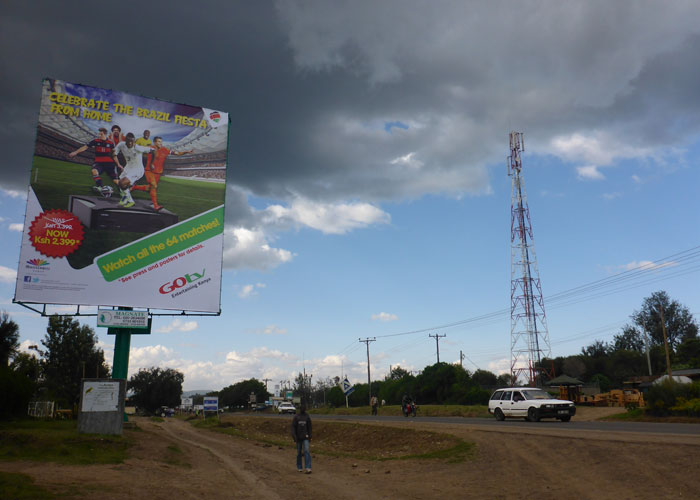
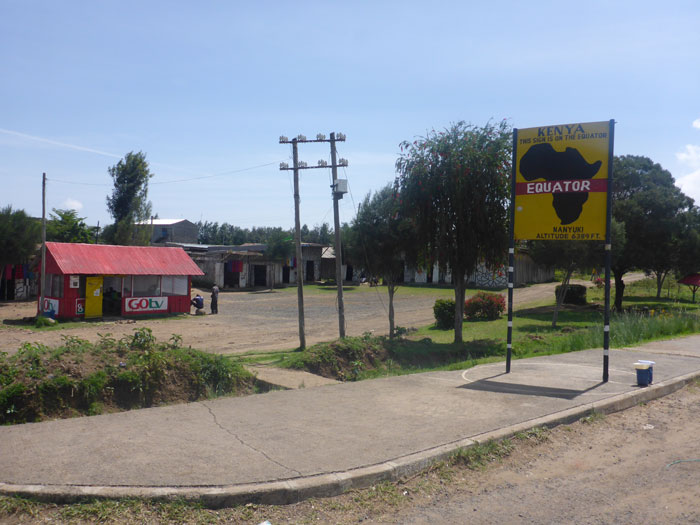

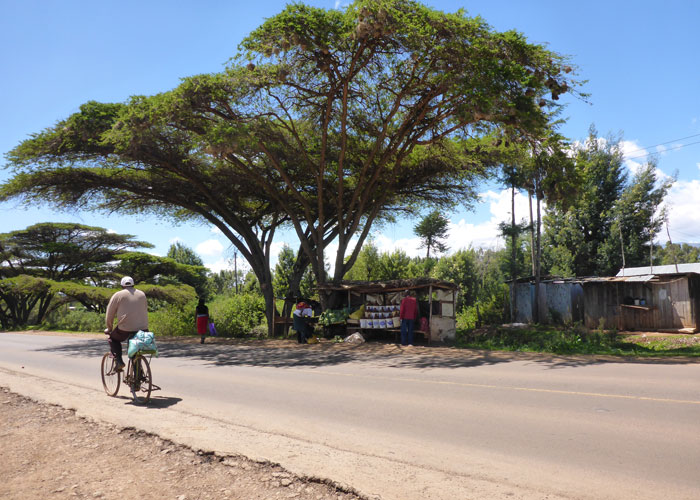


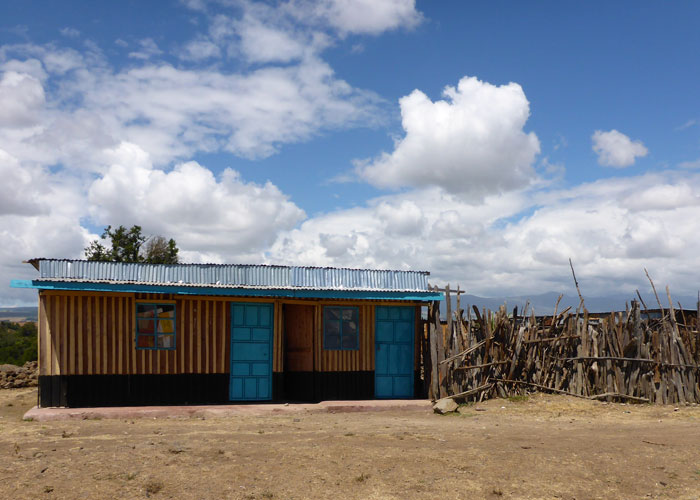
The road approaching and through town is skirted by multicoloured shops, hotels, timber yards, schools and Nakumatt (a modern Western style supermarket). The roads are always busy with motorbikes/tututs, packed busses/matatus, British army vehicles, lots of bicycles and massive trucks pumping out horrid fumes as they transport good northwards.
Motorbikes and bicycles are very common and seem to carry everything from people (I’ve seen 3 adults and a baby on the back of a motorbike!), to beds and tables, goats (yes, the animal!), crates of Fanta or Tusca balanced high on the back, you will also see branches up to three meters long being transported (width ways!), grass (that has been hand cut with a panga) being taken away to be made into roof or fence thatching, bags and bags of cabbages or vegetables, I could go on! Basically, large amounts and sizes of anything you think impossible to transport by bike, will be!
Rules of the road: there are none really! Like in the UK, in Kenya you drive on the left. However, overtaking and undertaking are a regular occurrence and sometimes I’ve seen it three abreast in one direction, with no-one looking like they would give way if anything was to come in the other direction! Having been cycling a lot on the roads, I like the numerous others on bicycles take their life in their hands every time you use a main (tarmac) road. On a number of occasions I have had a vehicle pass by me literally inches away from hitting me, bicycles are expected to move on the verge almost to let vehicles past. If you come across a bush on the road, this signifies an accident.
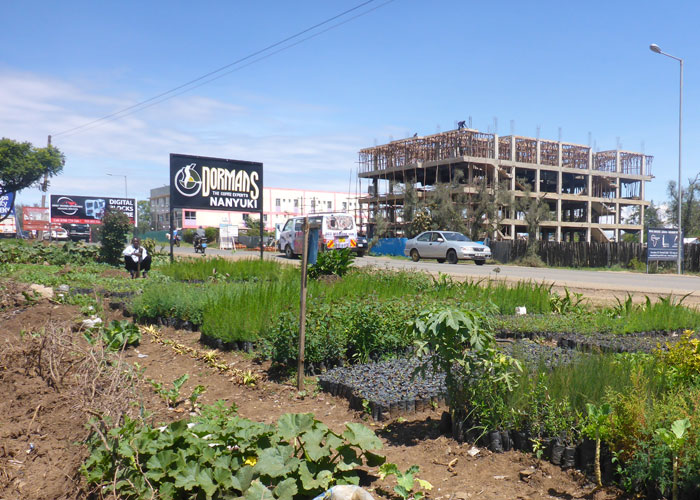

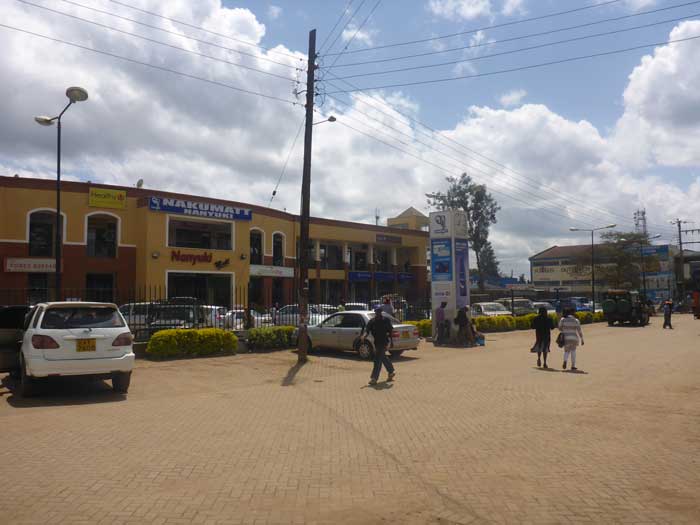

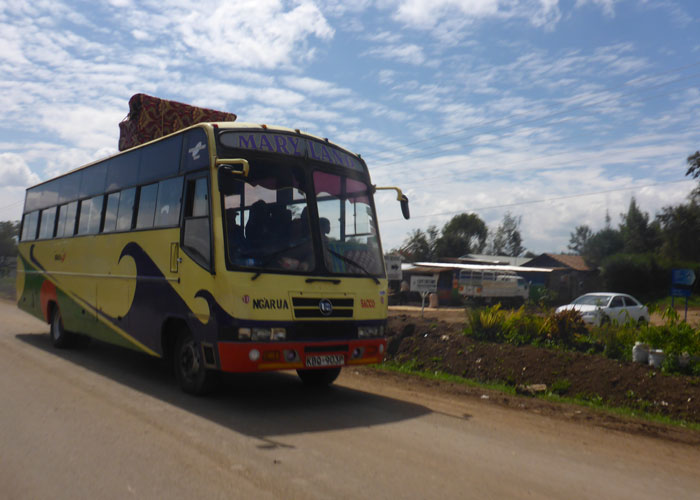

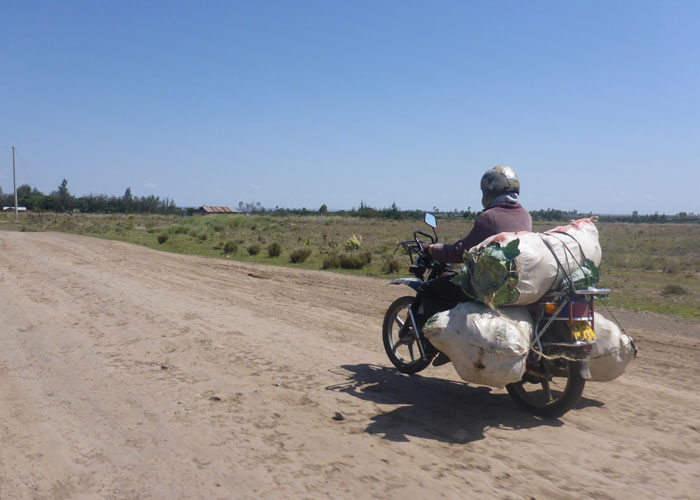
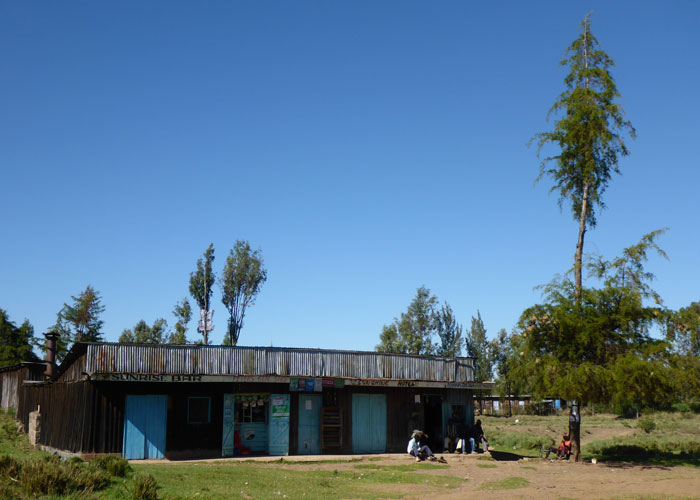
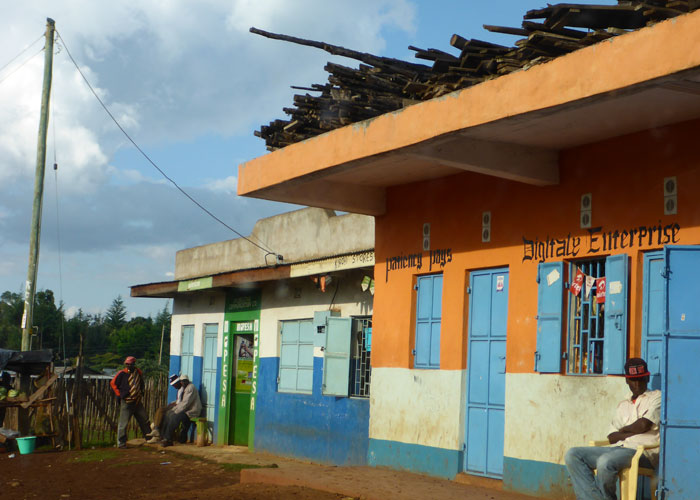
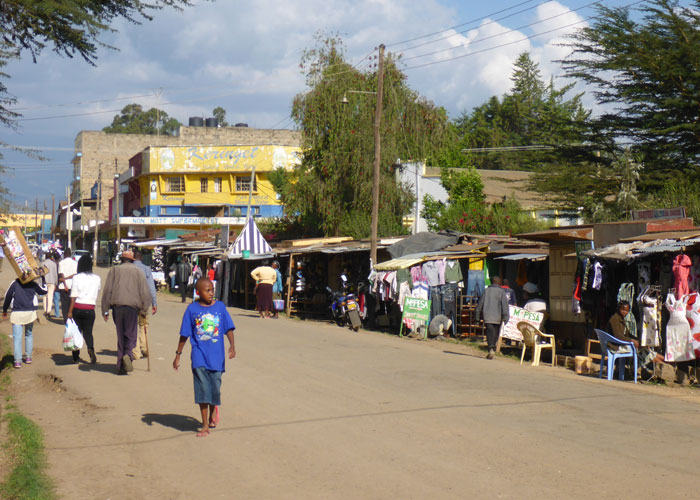
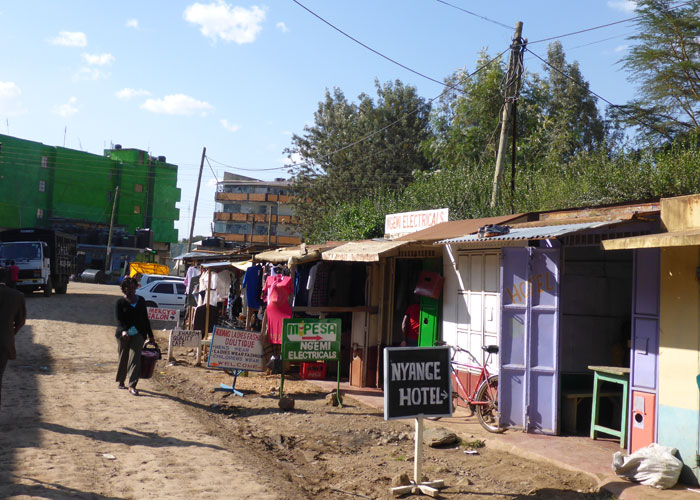
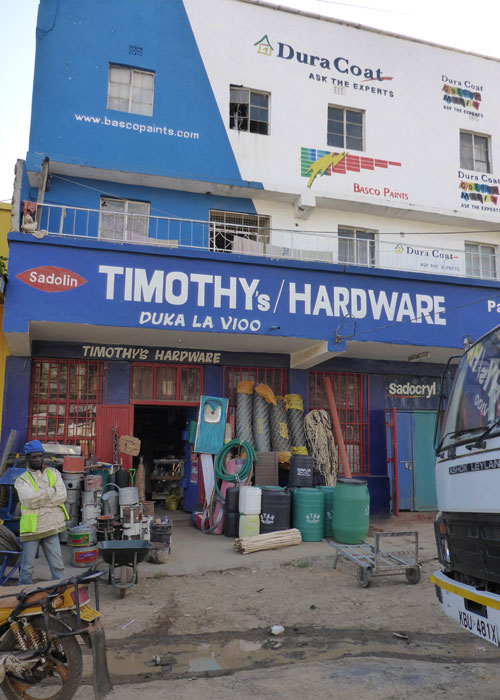
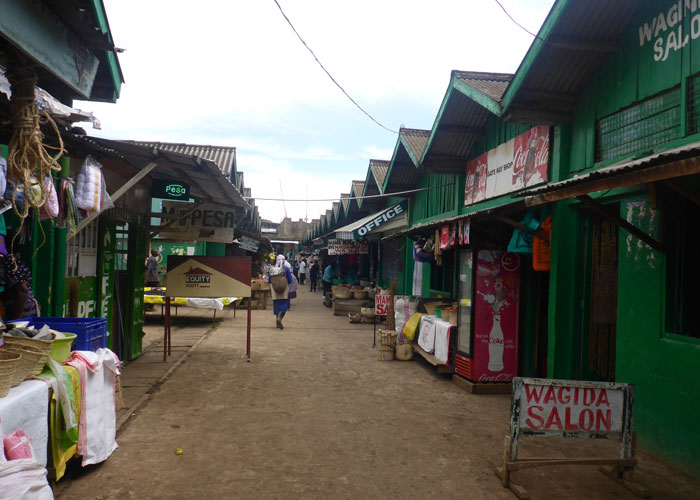
Take any of the side streets (Kimathi Road or Lumuba Street) in Nanyuki and you will see lots of multicoloured shop fronts, big and small, there are beauty parlours, tailors, hardware shops, butchers, restaurants, cafes, clothes-shoes-luggage shops, stationers, internet cafes, music shops, mobile phone shops, butchers and numerous fruit and veg stalls. There is a main covered market which is painted bright green when you get inside, it has fruit and veg stalls, fabric and tailoring stalls and stalls selling grains and legumes from woven baskets with tin cans to measure. You will also see lots of little roadside stalls built from wood, most of them will be selling fruit and veg or clothes.
SafariCom is the main mobile provider in East Africa, you will see it advertised everywhere, billboards, shop fronts. Everyone seems to have a mobile phone (mostly Samsung), but from what I have read, people would spend money on phone credit as opposed to the necessities in life, like food in some instances. Modern technology has a lot to answer for!


There is a big expat community in Nanyuki and a lot of NGO’s operating in the area. The local Irish bar (there is always one!) The Lily Pond is run by Jerry, has outside seating set beside a big lily pond, they do good food, including a Sunday roast and have lots of entertainment going on. The main coffee shop is Dormans a Kenyan chain, they serve descent coffee, not Nescafe, good food and have good wifi (I spent a lot of time there using the wifi). Other places I have eaten in are Barney’s, The Spice Garden (great chicken wings!) and Lions Court Lodge. There are lots of places to eat round town.
If you ask for tea in Kenya, you will quite often receive a flask of hot water, milk (hot or cold) and a tea bag to allow you to make your own. On the other hand, you may receive a pot of very milky, sweet, tea. Kenyan Chai is another option, it is a mixture of spices similar to; ground ginger, cinnamon, cloves, cardamon, black pepper and nutmeg, this can vary slightly, and is still milky, sweet and pre-made in the pot for you.
On my many bike rides around Nanyuki and it’s outlying communities, I have always shouted Jambo as I pass people, pretty much all of the time I am cheerfully replied to with “Jambo Sana” (hello very much), “Karibu” (welcome) or ” Habari” (how are you?). In Swahili, you never say you have bad news, you always say “everything is good, but…”
When I’ve cycled passed children or schools, the kids all come running up to me shouting “how are you?”, along with “give me sweets” or “give me money”. I have also had “Muzungu” (white person) shouted at me quite a few times, but it comes along with a smile! I have had some quizzical, sceptical looks, as if to say “why on earth are you cycling for fun/fitness in the sunshine!”. I was warned that I may have stones thrown at me by kids… I didn’t quite believe this, but on one occasion, it did happen, but only once!
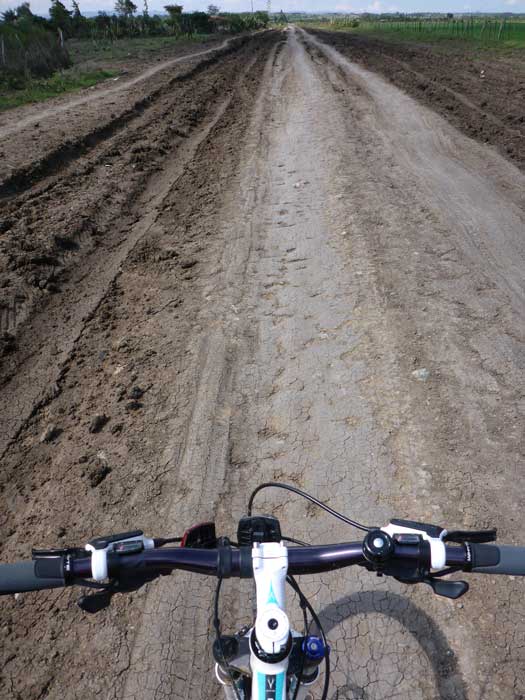
On the roads that aren’t tarmac, the ground is normally dry, dusty mud, but when the rains fall and they fall hard, usually for short showers, it turns to a thick glue like substance called “maram mud” and makes biking, and driving, very interesting, a bit like driving on ice!


From speaking to locals and business owners, Kenya has suffered considerably with the the loss of tourism over the last few years, this was quite apparent in Diani, with a lot of empty and derelict hotels along the beach front. The recent FCO warnings have done nothing to improve this and have already had an impact, with groups cancelling trips and safaris in the Laikipia area, choosing instead to go to other African countries.
The best way of disposing of rubbish seems to be burning it, I’ve seen this done in the grounds of a couple of camps, but it’s never noticed and done in a small pit. However a lot of things are reused or recycled, maybe not quite like in the UK. Glass bottles like Tusca and Fanta when bought in the shops have a deposit on them, when you return them they are sent back to the distributors for recycling. But, they aren’t melted down, instead they are washed, sanitised and refilled for sale again. This is the same in pubs and restaurants too, but the pub or restaurant own the actual bottle and just refill it. It seems like a good system to me, as it avoids the cost of melting and recreating the bottles.
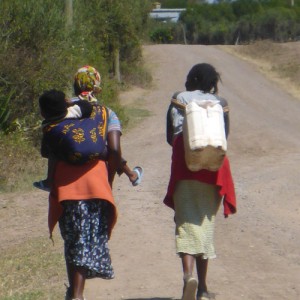 I’m yet to see a pram, buggy or pushchair in Kenya! All children are carried on their mothers backs, more often than not in a Kanga, which is a traditional cotton African garment, that contains a message in Swahili, the message is called the jina (name) of the Kanga, messages are often in the form of riddles or proverbs. Kanga’s come in two parts and are often made into a skirt and top. I have also seen them used to carry shopping, thrown over the shoulder, or as a carry handle for a container of water.
From pretty much anywhere in Nanyuki you can see Mount Kenya, it dominates the landscape and attracts mountaineers from all over the world. There are lots of local guides who are willing to take you up the mountain via a choice of routes, usually accompanied by a team of porters, carrying tents, cooking gear and food.
I have seen and learnt so much about life in Kenya in my short time in Nanyuki. This post doesn’t cover half of it and I think I’ll be adding to it in the future. Nanyuki is a lovely town and the people have been very friendly and welcoming to me!
Mount Kenya Wildlife Conservancy and Animal Orphanage
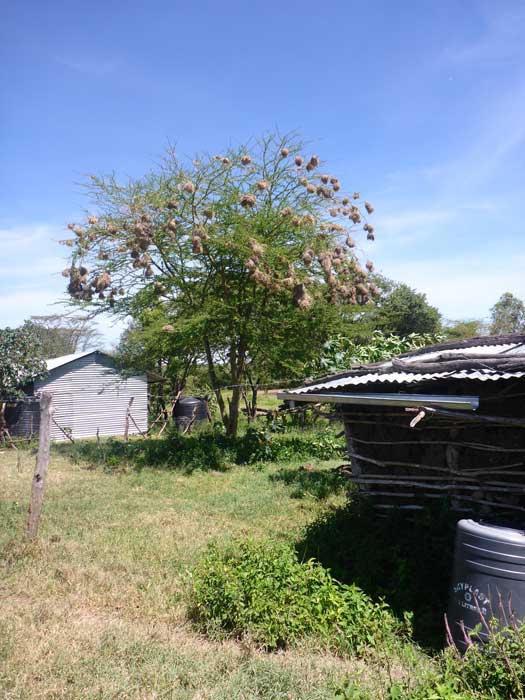
The Mount Kenya Safari Club is a short cycle from Nanyuki, but a world away from the nearby village of Kanyoni, with it’s traditionally built thatch, sticks and baked mud houses. The views of Mount Kenya on the approach road, if not for the clouds today, would have been amazing!
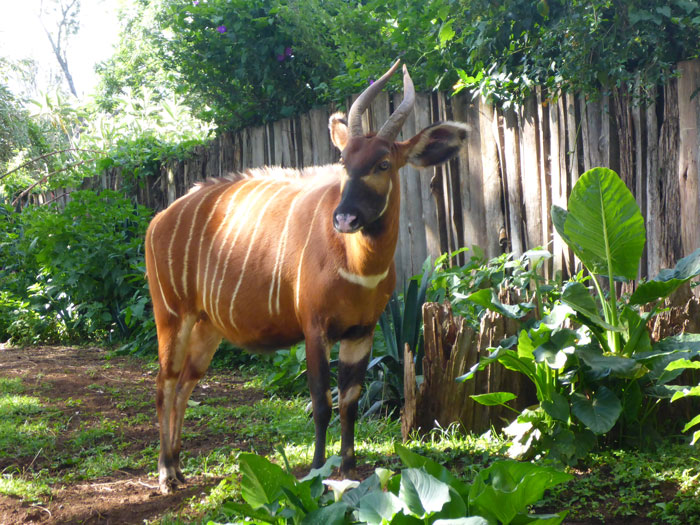
Within its grounds is the Mount Kenya Wildlife Conservancy and Animal Orphanage, which gives orphaned or injured wild animals professional care, a second chance and release back into the wild. There is a wide variety of animals in the orphanage, from a very old Porcupine, a Bush Pig, Warthog, 1 yr old Buffalo bull, many breeds of wild cats and monkeys and a family of Lamas. I addition to their work as an orphanage, their Bongo breeding programme has successfully re-introduced around 70 Bongo into the wild in the Mount Kenya forests.
-
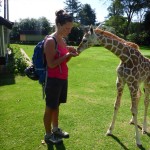
- 5 week old Giraffe that had been brought in by Masai after being orphaned

-
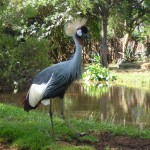
- African Crested Stork

-
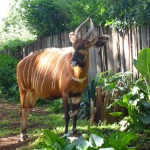
- One of the adult Bongo that are used to breed for re-introduction into the wild
-
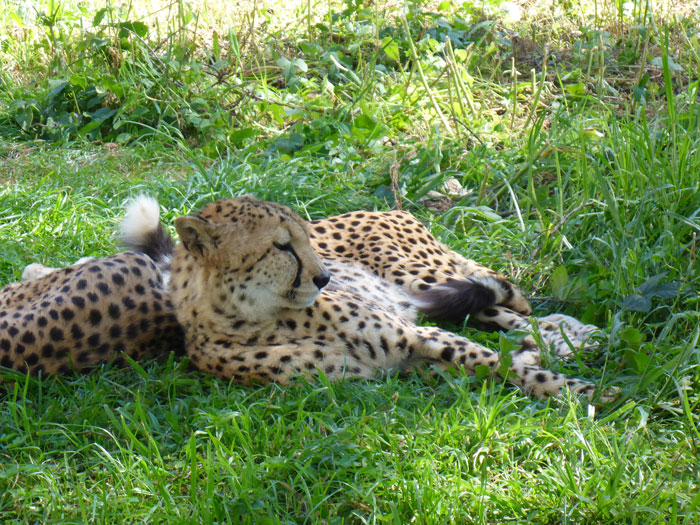
- Male Cheetah twins looking for breeding partners, to stop inter family breeding which weakens the breeed
-
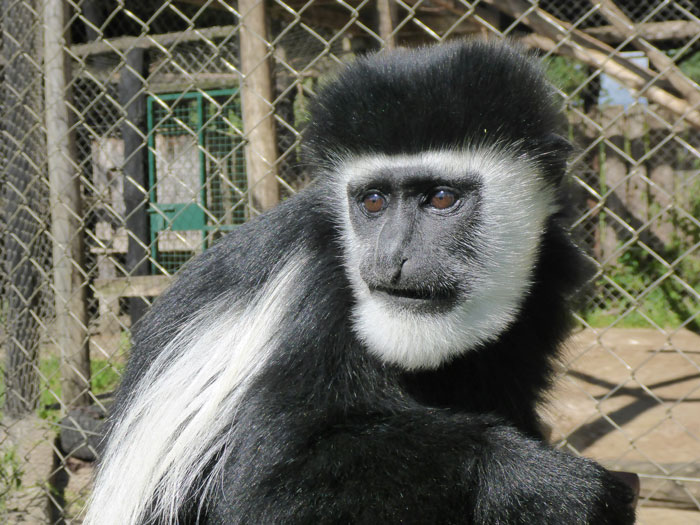
- Colobus Monkey, I have been lucky enough to see these in the wild in Diani on the Kenyan coast
-

- Monkeys will do anything for bananas

-

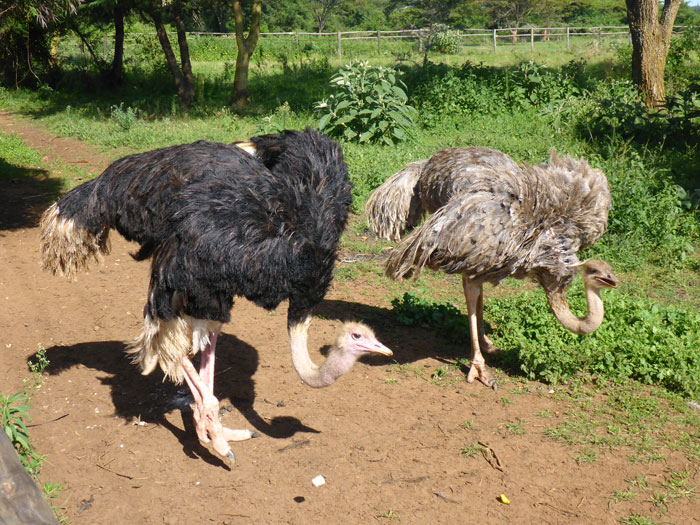
- A pair of Ostrich (black male, fawn female), have recently laid eggs
-
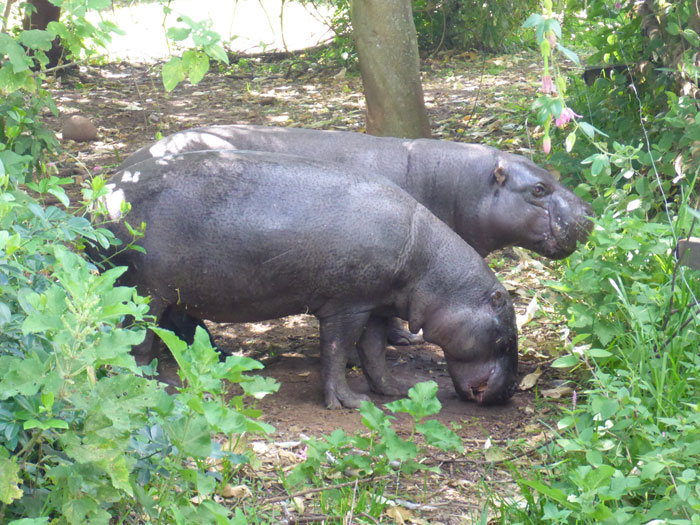
- Pygmy Hippos who have mates for life
-
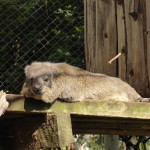
- The Rock Hirax is a distant relative of the Elephant

Ngare Ndare Forest canyon
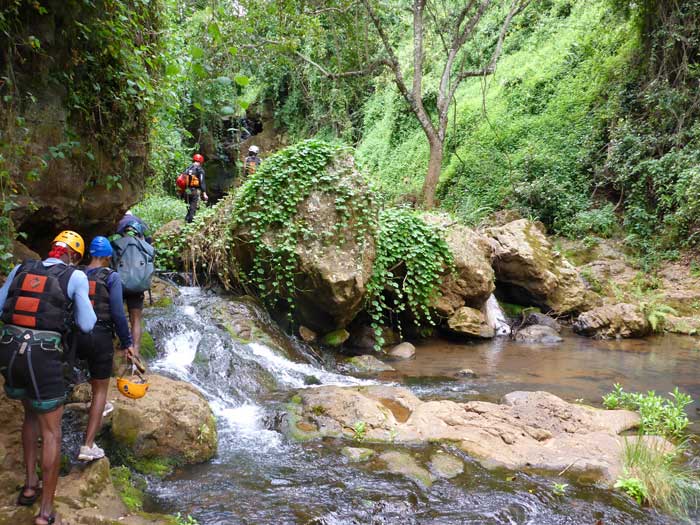
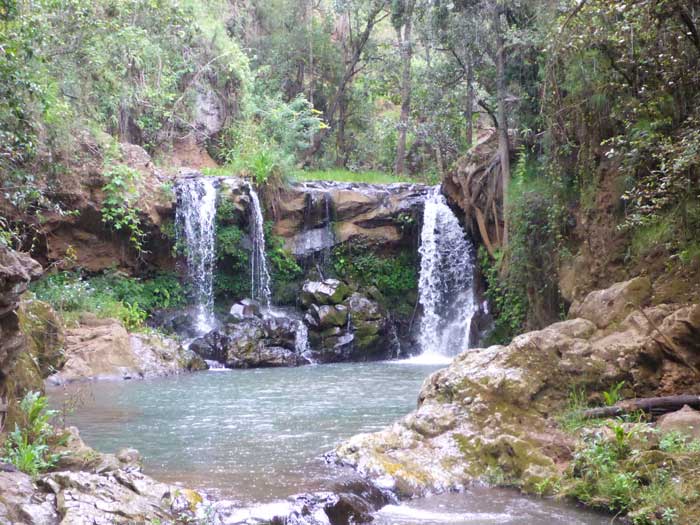
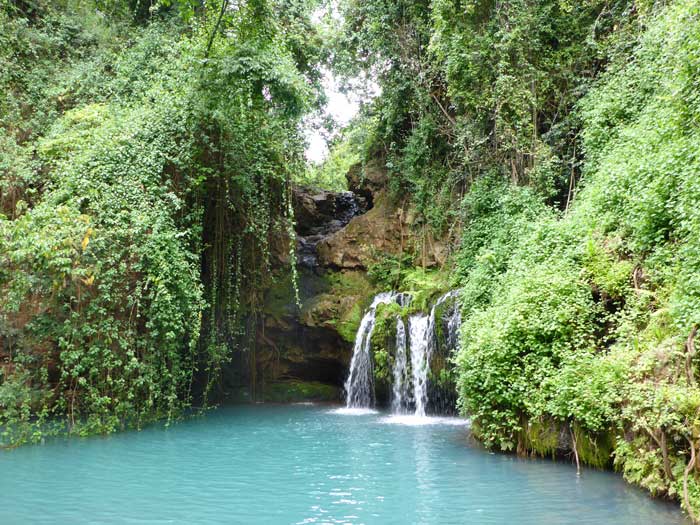
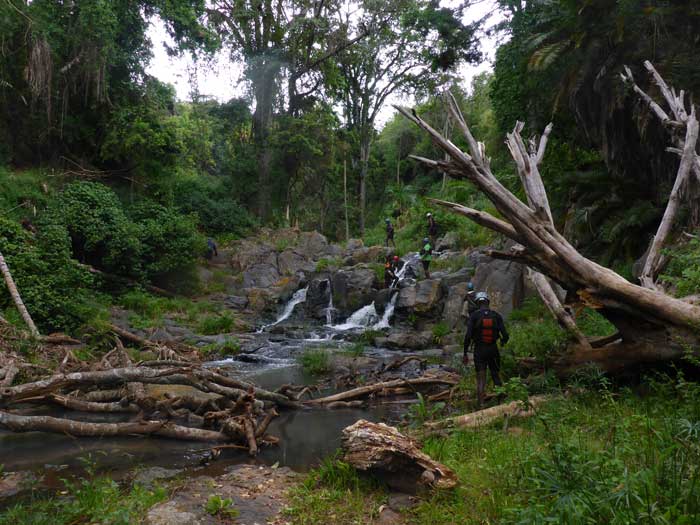
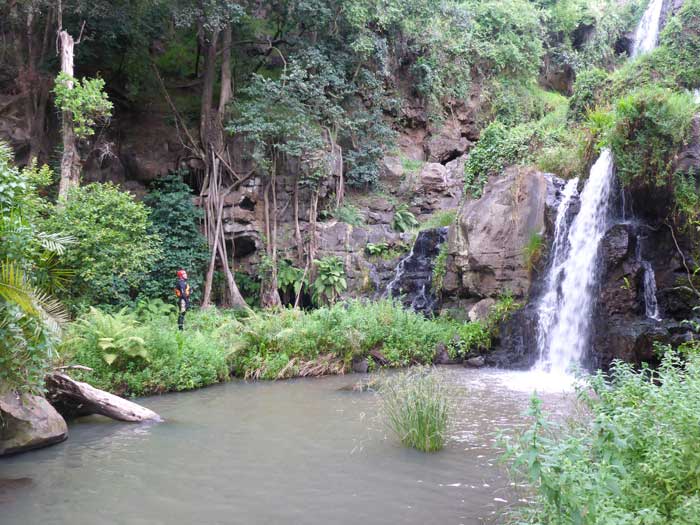
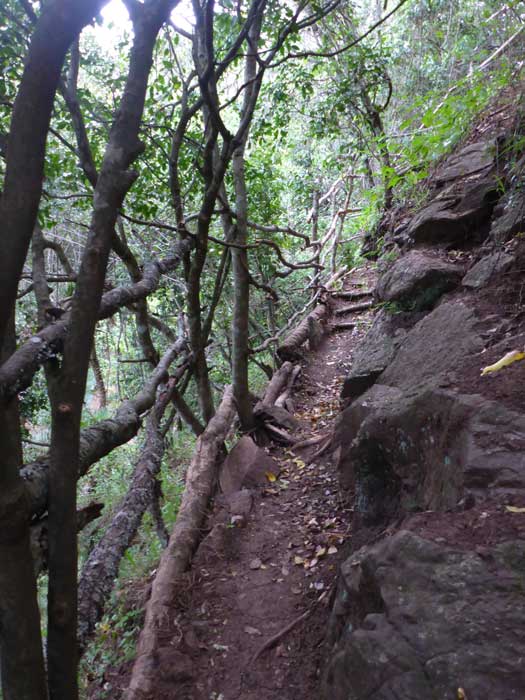
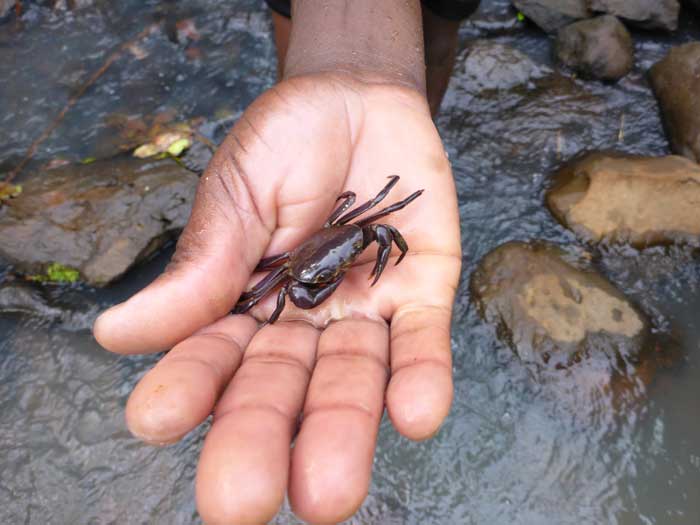
Ngare Ndare Forest a lush indigenous forest at the foothills of Mt. Kenya, Ngare Ndare is Maa for “goats water”. The forest provides a corridor linking the Lewa Wildlife Conservancy to Mount Kenya, one which elephants have been using for centuries. The banks of the canyon are dense with 200 year old trees and support a variety of bird and animal life. We found a crab in the shallow rock pools and came across a Buffalo spider who had spun his web right across the path, which I almost walked straight into!
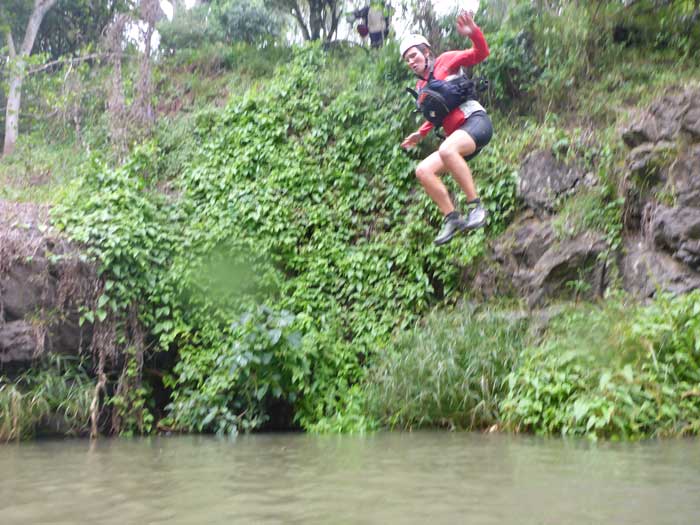
We visited the canyon taking on the jumps in the upper canyon which groups go down all the time. We stopped for lunch in the nearby village and had some sweet Kenyan tea and chipatis. Then we explored the lower canyon where we found a few jumps and lots of waterfalls, some jumpable, some not. We walked along the edge of the river where you could see evidence of elephants having been through. There was also a very strong smell of mint, from the bushes and bushes of wild mint growing on the banks.



I grew up in Nyeri...not too far from Nanyuki. Fond memories. You've described Nanyuki pretty accurately. Glad you enjoyed your…
Hallo.i have reading now ur article. I live 9 years in Nanyuki and like this life and the ppl. Welcome…
Thank you! Glad you enjoyed it and found it useful. I enjoyed the few months I stayed in Nanyuki last…
Hey Mzungu lassie? Very informative info about Nanyuki and the surrounding areas. I've been there once (for a day) and…
Brilliant pics, You must sleep well, whizzing around on quad bikes up & down the dunes and sand boarding.